The Austrian School of Economics

MI-BF567_austri_D_20100827174733


The great Peter Boettke – dean of the contemporary Austrian school


I wanted to become an academic economist after discovering the Austrian school as an undergraduate. This prompted an interest in economic methodology and I’ve written articles that explain (and defend) methodological individualism; and argued that recent developments in the Austrian school have extended the use of thought experiments to create an entire family of comparative and counterfactual analysis research strategies. I believe that there is currently a second revival in Austrian economics, and wrote a brief survey of contemporary developments in the Austrian school of economics, signalling that: (i) the amount of Austrian research and the number of Austrian researchers is growing exponentially; (ii) good Austrian economists are not being marginalised by the economics profession; and (iii) there have been significant advances in our understanding of economics made recently.

If you are interested in learning more about Austrian economics, I recommend:

Economics for Managers – MIM


Course outline: Economics for Managers (MIM) 2019/20

Course textbook:

Problem set: download here.


1. Consumer behaviour and basic review

1a. Max U +
Evans, A.J., Maximilian Untergrundbahn, January 2018
Instructions: Complete the assignment questions

1b. Course Introduction & Administration

2. Cost functions and price discovery

2a. Cost curves* +
Evans, A.J., La Marmotte, January 2012
Instructions: Complete Exhibit 1 and provide suggestions for the two key decisions

2b. Comparative Statics +

3. Asymmetric information

3a. Adverse selection +
Akerlof, G.A., (1970) “The Market for ‘Lemons’: Quality Uncertainty and the Market Mechanism”. Quarterly Journal of Economics 84(3):488–500 (£)

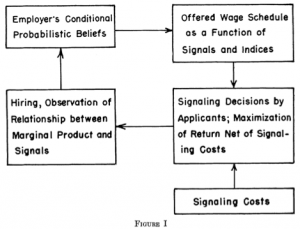
3b. Signalling* +
Spence, M., (1973) “Job Market Signaling“. Quarterly Journal of Economics 87(3):355–374 (£)

4. Strategic behaviour

4a. Introduction to Game Theory* +

4b. Oligopolistic competition +

5. REVIEW SESSION ON MICRO PROBLEM SET 

6. National income accounting

6a. Economic growth* +
Solow, R., (1956) “A Contribution to the Theory of Economic Growth” The Quarterly Journal of Economics, 70(1):65-94 (£)

6b. Capital Theory* +

7. Monetary policy

7. Monetary policy* +

8. Fiscal policy

8. Fiscal policy* +

9. International economics

9a. Foreign exchange +

Evans, A.J., “Josko Joras (A)”, December 2012

Instructions: Complete questions 1, 2 and 3

9b. Dynamic AD-AS recap +

10. REVIEW SESSION ON MACRO PROBLEM SET

Note:

Sessions marked with an asterix (*) have a lecture handout available in advance.

Readings marked with a (£) sign means that you may need library access.

A + sign provides a link to a page of additional resources.

Microeconomics – MBA

This course provides an overview of basic microeconomic theory and applies it to business decision-making. In particular, it will present the main principles of microeconomics from the perspective of strategic behaviour. The course draws on examples from the business world to illustrate the practical relevance of the models used.


Course textbook:


1. Consumer behaviour and negotiation

1a. Value creation* (+)

1b. Understanding cost* (+)

Textbook: Chapter 1.2 and Chapter 2.1

2. Supply decisions

2a. Cost curves* (+)

Evans, A.J., “La Marmotte”, January 2012

Instructions: Complete Exhibit 1 and provide suggestions for the two key decisions

2b. Economies of scale (+)

Rivkin, J.W., “Dogfight over Europe: Ryanair (A)” Harvard Business School case no. 9-700-115, November 21st 2007 (£)

Discussion question: What are some sources of economies of scale? How do they apply to British Airways in 1986?

Textbook: Chapter 2.2, 2.3 and 2.4

3. Markets and prices

3a. Auctions (+)

Hild, M., Dwidevy, A., and Raj, A., 2004, “The Biggest Auction Ever: 3G Licensing in Western Europe”, Darden Business Publishing (£)

Discussion question: What are the alternatives to auctions?

3b. Equilibrium assignment (+)

Textbook: Chapter 3.1, 3.2, and 3.3

4. Asymmetric information and market design

4a. Adverse selection (+)

4b. Prediction markets (+)

Coles, Peter, Lakhani, Karim and McAfee, Andrew, “Prediction Markets at Google” Harvard Business School Case No. 9-607-088, August 20, 2007

Textbook: Chapter 3.4 and Chapter 4.4 and 4.5

5. Strategic microeconomics

5a. Game Theory (+)

5b. Oligopoly (+)

Textbook: Chapter 5.2

Note:

Sessions marked with an asterix (*) have a lecture handout available in advance, which can be downloaded.

Cases marked with a pound sign (£) are either available via Blackboard or through the library.

Macroeconomics – International MBA

This course provides a thorough and contextual perspective on various forms of macroeconomic policymaking. In addition to looking at how monetary and fiscal policy can be used to manage the domestic economy, we will take an international approach to various forms of economic crisis. By the end of this course students will be able to critically engage with some of the key indicators that may help to predict a currency crisis, and relate this to famous historic cases. We will look at the role played by international institutions during sovereign debt crises, and gain experience at identifying, summarising, and communicating relevant data.


Course textbook:


Assessment:

  • 40% group report (see here)
  • 60% individual MCQ (practice exam to follow)

Pre class activities
Before the course begins you should watch this video on Prediction and pass this quiz.
Day 1: Macro policy decisions
1&2. Monetary policy (+)

3&4. Fiscal policy (+)

After class you should watch this video on Macro Policy and pass this quiz.

Day 2: Countries in crisis
5. International economics (+)

6. Currency crises (+)

  • “Currency Crises” Harvard Business School case no. 9-799-088 (£)
  • Discussion question: Which countries are on the verge of a currency crisis?
  • Textbook reference: Chapter 8.3 and Chapter 10.4

7. Debt crises (+)

  • Blustein, Paul “And the Money Kept Rolling In” Public Affairs, 2005 (pp.39-60) (£)
  • Discussion question: As of July 1998 should the IMF suspend their program in Argentina, or continue their support?

8. Macro Policy Workshop (+)

After class you should watch this video on Credibility.

Day 3: Group projects and wrap up
9. Macro Strength (Assessed Group Work)

10. Q&A

Note:

Cases marked with a pound sign (£) are either available via Blackboard or through the library.

Analytics

How can I use data to understand my organisations situation and performance?

From 2006 – 2010 I taught a Quantitative Methods course at ESCP Europe. I enjoyed it immensely and got great feedback from students. Since then I’ve continued to gather material but realise that no-one gets to see it. So I’ve created an online course.

The course should be of use to anyone with an interest in an MBA level education, and I have attempted to supplement my own presentations with links to some exceptional online resources.

The rest of this page contains some further resources and links.

Pre-reading

Prerequisite

Textbook

I hope you find the online course useful, but I am also a fan of the old fashioned way. The course ties in to the following textbook:

download

It is a very good one: well written, full of examples, and plenty of opportunities to test yourself. You could do a lot worse than simply order it now and then work your way through it.

I’m also intrigued by “Calculus Made Easy“, by Silvanus Thompson. It’s antiquated in format but highly directed toward simplifying concepts and engaging with the reader. Statistics Done Wrong also looks fun.

Pop analytics

I believe that a good way to prepare for a subject is to read a book that is captivating. Something that stimulates your interest and encourages you to dig deeper. There are lots of bestsellers that have attempted to communicate mathematical ideas to the educated layperson. My favourite 6 are these:

Other online courses

The University of Bristol Medical school has a lovely Research Methods & Statistics online course. Introductory Statistics, an online course by Andy Field. It is full of some excellent tutorials that are presented with a unique style. The New York Times have made their course on data skills publicly available, there’s a link here. A thorough course designed for incoming PhD students is the Princeton Sociology Summer Methods Camp 2019. Here is the free course MITx Probability.

I also love this course: Calling Bullshit in the Age of Big Data.

There are also lots of proper online courses to choose from. The only one I have direct experience of is this:

If you really need to develop your QM skills then I would recommend you follow the HBS one instead of mine. However I found it pretty dull and failed to complete it. I’m hoping that by providing a mixture of content you will find mine more enjoyable.

Other resources

Instrumental variables: this tweet and these lecture notes

False positives and coronavirus.

Examples of bitemporal charts (especially good on economic forecasts)

Video on Bayes’ theorem.

Double y axis.

Software and misc.

Daniel Kunin has a wonderful website called “Seeing Theory“, which allows users to visualise basic concepts in statistics. I’ve integrated links into the course below.

Software: http://datasplash.com/

Handouts


APPENDIX: Controversies

I believe that the best way to internalise the key concepts in this course is to conduct a replication exercise. These have become increasingly common as ways to apply the concepts covered, and test a students knowledge retention. To be honest though I am yet to find any really good examples of statistical tests that companies have utilised, and for which the underlying data set is available.

In their textbook, “Modern Principles: Macroeconomics”, Tyler Cowen and Alex Tabarrok present a good exercise to replicate a Solow Model. My (flawed) attempt to combine two of their problem sets is here:

Whilst I continue to look for potential replications, one option is to focus on some controversial statistical debates. These are also good ways to go deeper into the theory, and fully appreciate the link between theory and practice.


After party

You should now be a savvy consumer of statistical analysis and passionate about good data management. I recommend that you treat yourself to the following tome:

download

Thank you for visiting.


Last updated: June 2019

Categories

These are longer essays published on Medium:

(Medium hasn’t achieved what many lapsed bloggers had hoped. But I prefer it to Substack because I don’t like consuming essays via email).

For a list of all posts within the Course Map Category, see my Course Map.

Here are two offshoots from my chapter on “A Social Entrepreneur’s Toolbox” which featured in the CADI publication: An applied guide to social entrepreneurship.


Here is a list of my non academic work:

My theatre reviews are available here. Here’s my review of Saul Bellow’s Herzog.


I have 7 articles in the Research Category:

I have 12 posts in the Menu category:


My guides:

Other:

My reading lists:

Here is a complete list of the other articles published on this website (several of which have also appeared in my Newsletter):


Finally, some links to my favourite X/Twitter threads…

…and my favourite X/Twitter jokes:

Belarus

This page gathers various resources relating to my study of Belarus.

Personal essays

Memos

  • What happened in Belarus? GCRF COMPASS Policy Brief, 25 November 2021 – On August 9th 2020, Belarus went to the polls. The people voted (most of them, probably, for change) and yet the President remains in power. This policy brief provides a summary of what happened and an analysis of why.
    • I was a signatory to an open letter dated August 19th 2020 and addressed to the Belarusian authorities on behalf of concerned economists. 
  • What we know about transition – This memo summarises some of the key insights from the literature on transitional economics. It focuses on the experience of countries in Central and Eastern Europe who engaged in their reform programmes following the collapse of communism.

Academic publications

2024 “Competitive authoritarianism, informational authoritarianism, and the development of dictatorship: a case study of Belarus”, Public Choice, Vol. 198, pp. 343-360 (viewable PDF)

2019 “Ranking Belarus on Competitiveness and Economic Freedom” Journal of Entrepreneurship and Public Policy, (with Sierz Naurodski), Vol 8, No. 2., pp.226-240

2018 “A strategic plan for the East Belarus mechanical engineering cluster” International Journal of Competitiveness Vol. 1, No. 3 (with Terence Tse)

Other publications

A Belarus Monetary Perspective” Markets and Money Advisory, March 2018


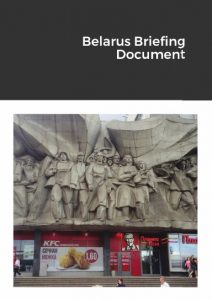
The Belarus Briefing Document is a comprehensive slide deck showing the social, economic, and political history of Belarus.

Listen to the audio version here:

Anthony J. Evans · Belarus Briefing Document


Video

I also recommend Peter Santenello’s YouTube video:


Articles

47

2026 “Monetary Policy and Central Banking: Challenges in the Current Environment” Economies, Vol. 14, No.3, p.78

2025 “Civil society and authoritarian regimes: a case study of Belarus” Constitutional Political Economy, forthcoming

2025 “A Survey of Recent Critical Histories of Neoliberalism” Critical Review, Vol. 37, Issue 2-3

2025 “Four phases of neoliberalism” Journal of Private Enterprise, Vol. 40, No. 2, pp. 55-71

2025 “Were Chinese style reforms a potential alternative for Russia? A reflection on state capitalism, democratic socialism, and transition” Post-Communist Economies, Vol. 37. Issue 3, pp. 187-202

2024 “Expert or victim? How the way in which game theory is taught affects payoffs in an iterated Cournot game” Journal of International Business Education, (with Wioletta Nawrot), Vol. 19, pp. 103-120

2024 “Is Economic Familiarity a Necessary Prerequisite for Understanding Milton Friedman’s View of Shareholder Primacy? Reflections on a Classroom Exercise“, Journal of International Business Education, Vol. 19, pp. 199-226 (more resources)

2024 “Competitive authoritarianism, informational authoritarianism, and the development of dictatorship: a case study of Belarus”, Public Choice, Vol. 198, pp. 343-360 (viewable PDF)

2023 “Information, classification and contestability: a cultural economics approach to Uber’s entry into the taxi industry” Review of Austrian Economics, Vol. 37, pp. 421-442 (viewable PDF)

2022 “Jean-Baptiste Say: A Proto-Austrian Warning against Lord Keynes”. Journal des Économistes et des Études Humaines, (with Nikolai Wenzel), Vol. 28, No. 1, pp.105-115

2022 “The upper turning point in the Austrian business cycle theory” Review of Austrian Economics, (with Nicolas Cachanosky & Robert Thorpe), Vol. 35, Issue 1, pp.89-97

2021 “Insider trading and the potential for sabotage” Business Ethics Journal Review, Vol. 9, Issue 9, pp.54-59

2021 “New Evidence and Some Clarifications on the Ethical Implications of Hybrid Banking Contracts” Quarterly Journal of Austrian Economics, Vol. 24, Issue 4, pp. 147-161

2020 “The Natural Rate of Interest: Estimates for the UK“, Economic Affairs, Vol 40, Issue 1., pp. 24-35 [spreadsheet]

2019 “Ranking Belarus on Competitiveness and Economic Freedom” Journal of Entrepreneurship and Public Policy, (with Sierz Naurodski), Vol 8, No. 2., pp.226-240

2018 “A strategic plan for the East Belarus mechanical engineering cluster” International Journal of Competitiveness Vol. 1, No. 3 (with Terence Tse)

2017 “Monetary Ratios in a Modern Regime: Why the Monetary Base still Matters” Economic Affairs, 37, No. 1, pp.102-111 | Data

2016 “A dynamic AD-AS analysis of the UK economy 2002-2010”, Journal of Private Enterprise, Vol. 31, No. 4, pp.97-105

2016 “The Great EU Debt Write-Off” (with Terence Tse and Jeremy Baker), Simulation and Gaming, Vol. 47, No. 4, pp.543-556

2016 “The Microfoundations of Austrian Economics through a New Classical Theoretical Lens” (with Paul Dragos Aligica), Review of Political Economy, Vol. 28, No. 1, pp.113-133

2016 “The unintended consequences of easy money: How access to finance impedes entrepreneurship”, Review of Austrian Economics, Vol. 29, No. 3, pp.233-252

*2015 “What is the Latin for ‘Mayonnaise’? A Response to Bagus, Howden and Gabriel”, Journal of Business Ethics, Vol. 131, Issue 3, pp. 619-623

2014 “Contemporary Work in Austrian Economics” (with Vlad Tarko) Journal of Private Enterprise, Vol. 29, No. 3, pp. 135-157

2014 “Not enough bricks: Monetary misperceptions and the UK housing boom” Quarterly Journal of Austrian Economics, Vol. 17, No. 1, pp.19-45 (free download here)

2014 “A subjectivist’s solution to the limits of public choice”, Review of Austrian Economics, Vol. 27, No. 1, pp.23-44

*2014 “In Defence of ‘Demand’ Deposits: Contractual Solutions to the Barnett and Block, and Bagus and Howden Debate”, Journal of Business Ethics, Vol. 124, No. 2, pp. 351-364

2013 “The (quantity) theory of money and credit” (with Robert Thorpe), Review of Austrian Economics, Vol.26, No.4, pp.463-481

2013 “Balancing corporate culture: Grid-group and Austrian economics”, Review of Austrian Economics, Vol. 26, No. 3, pp. 297-309

2013 “A framework for the study of firms as constitutional orders” (with Nikolai G. Wenzel) Constitutional Political Economy, Vol. 24, No.1, pp.2-18

2012 “Pedagogical Synergies between Austrian Economics and the Case Method” Journal of Private Enterprise, Vol. 28, No. 1, pp.91-103

2012 “Heterogeneous entrepreneurship and the Sunday Times Rich List” (with Toby Baxendale) Revista Procesos de Mercado, Vol. 9, No.1, pp.411-428

2012 “On not doing due diligence: Bagus and Howden on free banking” (with Steven Horwitz) Review of Austrian Economics, Vol. 25, No. 2, pp.149-157

2012 “Ethnic enterprise governance: a public choice analysis of Liverpool’s Chinatown” Journal of Enterprising Communities, Vol. 6, No. 1, pp.28-38

*2011 “”Search” vs “browse”: A theory of error grounded in radical (not rational) ignorance” (with Jeffrey Friedman), Critical Review, Vol. 23, Issue 1-2, pp.73-104

2010 “A Nomos Approach to Social Change: Where Human Action Meets Cultural Theory” New Perspectives on Political Economy, Vol 6., No. 2, pp.51-77

2010 “The Parallels Between Sports Coaching and Graduate Teaching: Coach Boettke as Exemplar” Journal of Private Enterprise, Vol. 26, No. 1, pp.73-83

2010 “Austrian Economics Behind the Iron Curtain: The Rebirth of an Intellectual Tradition” Review of Austrian Economics, Vol. 23, No. 3, pp.243-268

2010 “What Austrian Business Cycle Does and Does Not Claim as True” Economic Affairs, 2010, pp.70-71

2009 “Thought Experiments, Counterfactuals and Comparative Analysis” (with Paul Dragos Aligica) Review of Austrian Economics, Vol. 22, No. 3, pp. 225-239

Translated as: 2008 “Thought Experiments, Counterfactuals and Comparative Analysis” (with Paul Dragos Aligica) Revue Française d’Economie Vol. XXI, No. 4, pp. 45-71

2009 “Constitutional Moments in Eastern Europe and Subjectivist Political Economy” Constitutional Political Economy, Vol. 20, No. 2, pp.118-138

2008 “Testing Times for Central Banks: Is There Room for Austrian Economics at the Top Table?” (with Toby Baxendale) Economic Affairs, Vol. 28, Issue 4, pp.36-41

2008 “Austrian Business Cycle Theory in Light of Rational Expectations: The Role of Heterogeneity, the Monetary Footprint, and Adverse Selection in Monetary Expansion” (with Toby Baxendale) Quarterly Journal of Austrian Economics Vol. 11, No.3, pp.81-93 (free download here)

*2008 “Dealing with Dissent: Whistleblowing, Egalitarianism and the Republic of the Firm” Innovation: The European Journal of Social Science Research, Vol. 21, No. 3, pp. 267-279

*2008 “The cultural foundations of management: a contemporary homage to Mary Douglas“ Innovation: The European Journal of Social Science Research Vol. 21, No. 3, pp. 83-184

*2008 “The Spread of the Flat Tax in Eastern Europe: A Comparative Study” (with Paul Dragos Aligica) Eastern European Economics Vol. 46 No. 3 pp. 55-74

2006 “Are Economic Ideas a Sustainable Commons? A Study of the Exchange of Creative Economics” Romanian Economic and Business Review Vol. 1 No. 3

2006 “The Spread of Economic Theology: The Flat Tax” Romanian Economic and Business Review Vol. 1 No. 1 pp.41-53 (viewable PDF)


Research profiles: Google Scholar | SSRN | IDEAS | Research Gate

Book reviews

2025, Quinn Slobodian, Hayek’s Bastards. Zone Books, 2025, Review of Austrian Economics

2024, Alicja Sielska (ed.), Transition Economies in Central and Eastern Europe. Austrian Perspectives, Routledge, 2024, Review of Austrian Economics

2021, Peter C. Earle and William J. Luther (Eds.), The Gold Standard: Retrospect and Prospect, Great Barrington: American Institute for Economic Research, 2021, Review of Austrian Economics

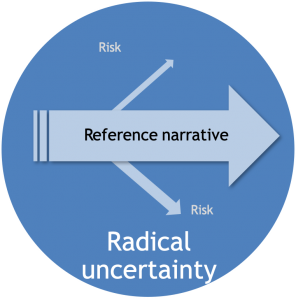
2021, John Kay and Mervyn King, Radical Uncertainty: Decision-Making Beyond the Numbers, London: W.W. Norton & Company, 2020, Review of Austrian Economics


Non peer-reviewed journals

2009 “Look Beyond Your Neighbour: A Peer Group Analysis of the Environment for SMEs Across Europe” (with Davide Sola and Jerome Couturier) Les Cahiers de Friedland No 4., pp.77-92

2007 “Reflections on Mary Douglas: Institutions, Rationality, and Wisdom” Ama-gi Vol. 8 No.1 pp.61-65

2005  “Ideas and Interests: The Flat Tax” Open Republic Vol. 1 No. 1


Trade journals

Autumn 2012, “What is Austerity?” Economic Affairs Student & Teacher Supplement, Issue 3

July 2012 “Barclays isn’t the only one engaged in the manipulation of interest rates” in The LIBOR Reader, Institute  of Economic Affairs

December 2009 “Ekonomiju ne treba posmatrati iskljucivo kroz prizmu BDP-a” ekonom:east magazin, Broj 501 [in Serbian]

July 2009 “The Times’ Guide to the City”, advertisement feature in Alex Davidson,  How the Global Financial Markets Really Work, Kogan Page

April 2009 “Whistleblowing: using dissent for competitive advantage” Talent Management Review, pp. 23-25

January 2009 “Blowing the Whistle” Payroll & Human Resources, pp.38-40

January 2009 “Egalitarianism and the Failure of Whistleblower Protection” The Whistle, No. 57, pp.8-10

June 2008 “Emerging Market Trends from Europe” Applied Clinical Trials pp.42-50 (with Terence Tse)

October 2006 “Libertarianism in Romania” Revista 22 no. 867 [in Romanian]

A Macroeconomic Tour of London

This tour can be conducted on foot, but links to virtual resources are also provided. 

55 Broadway, SW1H 0BD

This is a grade 1 art deco building near St James’ park, originally home to the London Underground. It’s not particularly tall (it’s only slightly bigger than Big Ben, and half the height of St Paul’s Cathedral) but given that it has a steel frame it is not only a skyscraper, but London’s first! (It doesn’t look like a skyscraper, but the stone encasing provides no structural integrity. Sadly, it closed in January 2020.

If you visit, try to spot the naked sculptures, Night and Day, on the outside of the building. (For controversy on this, see here).

HM Treasury, SW1A 2HQ

The Treasury is responsible for public finance and economic policy of the UK. It is located within the Government Offices in Great George Street, near Parliament Square. It has a large internal courtyard and the basement is home to the Churchill War Rooms (part of the Imperial War Museum).

Fun fact: It served as the headquarters for MI6 in the Bond movie, Spectre, and was the starting point of the street race in Fast And Furious 6.

11 Downing Street, SW1A 2AB

Next door to the most famous address in the UK (10 Downing Street is the government headquarters and traditionally the private residence of the Prime Minister), 11 Downing Street is the official residence of the Chancellor of the Exchequer. This is the equivalent of a “Minister of Finance”, which is the person responsible for fiscal policy.

Fun fact: Because the private living space is larger at no. 11 than no. 10, when Tony Blair became prime minister in 1997 he decided to live there instead. Every subsequent prime minster has done the same thing.

Take a virtual tour here: https://artsandculture.google.com/u/0/partner/10-downing-street

Bank of England, EC2R 8AH

Established in 1694 this is one of the oldest banks in the world and a model for central banks. It was nationalised in 1946. It has a monopoly on producing banknotes in England and Wales, and is responsible for the conduct of UK monetary policy.

There is an excellent museum in the basement, and several online exhibits, including this one on banknotes. The basement also houses the Bank of England vaults, which contain over 400,000 bars of gold.

Other tours:

A Tour of London’s Markets

Physical marketplaces are important cultural artifacts that demonstrate the importance of economic exchange for the pace and improvements of everyday living. And as Rachel Black said in her ethnographic account of Turin’s Porta Palazzo, “What other public spaces still bring together such an important cross-section of a cit’s population? What places allow for open discussion of just about any topic?” (2012, p. 38-39)

This tour can be conducted on foot, but links to virtual resources are also provided. 

Portobello Market, W11 1AN

The world’s largest antique market, in the famous Notting Hill. It’s main trading day is Saturday but the area also contains numerous permanent shops. Follow on Instagram to see details of virtual fashion markets on Fridays.

Brick Lane Market, E1 6QR

Containing bric-a-brac as well as fruit and vegetables, Brick Lane market is part of London’s East End and close to the world famous cluster of curry houses. The market is is open on Sundays and can get very busy! For more information see here or here.

Smithfield Market, EC1A 9PS

Smithfield Market is technically called “London Central Markets” and is located in Farringdon. It is one of the largest wholesale meat markets in the world and the site has hosted livestock for over 800 years.

There is a 90-minute tour that costs £12.50. You can book a tour here: https://www.cityoflondonguides.com/tours/smithfield-market-tours-monthly

Fun fact: Scottish revolutionary William Wallace, otherwise known as “Braveheart”, was killed at Smithfield in 1305.

Borough Market, SE1 1TL

Borough Market is one of the oldest and largest food markets in London, dating back to the 12th century. The present buildings were built in the 1850s and house an eclectic mix of speciality foods. Open Monday – Saturday.

For a virtual tour click here.

London Metal Exchange (LME), EC2A 1AJ

The London Metal Exchange (LME) originates from 1571, but was formed in 1877 and moved to its current location in 2016. It remains one of the few physical trading floors for a major commodity market – activity is conducted within an open outcry “ring”, which gets its name from when traders would mark out a ring using chalk on a coffeehouse floor. For more on its history see here.