Macro Seminar

Lecture handout: Macro Seminar

The key finding of monetary economics is that the root cause of inflation is excessive money creation. We looked at some specific examples of hyperinflation, and to learn more you can watch “Zimbabwe and Hyperinflation: Who Wants to Be a Trillionaire?” (Marginal Revolution University).

  • Steve Hanke runs the Troubled Currencies project which gathers black market data to construct up to date estimates of high inflation environments. You can see more here.
Group activity: ECB Simulation, April 2025
Group activity: Canadian Multiplier, April 2025

The concepts discussed in this section should help students to understand the rationale for Georgia’s “Law on Economic Freedom”, which limited the government to the following (see Lawson and Powell, 2019, p. 114):

  • Annual budget deficit of no more than 3% of GDP
  • National debt of no more than 60% of GDP
  • Annual government spending of no more than 60% of GDP
  • No new tax without voter approval

Also:

To keep up to date with my thoughts on economic issues either follow me on Twitter or see Kaleidic Economics.

Macro Trends

Macroeconomics can be a daunting subject matter but it is too important to be left to specialists. All senior managers need to be able to understand and interpret the macroeconomy, and reflect on the factors that cause it to change. This page gathers material that equips participants with a foundation in the models and frameworks needed to make sense of our context and policy responses, and develop an awareness of several key risks. They will help you to become familiar with with global growth forecasts and identify the key challenges facing policymakers.

And the best part is that the lecture is live!


Lecture handout: Macro Trends. Here is the quiz.

My attempt to provide some theoretical background to core macro concepts is my video on “The emoji equation of exchange“. See here for a quiz.

You can find the latest global growth forecasts from the institutions mentioned in the lecture here:

What you should be reading:

Newspapers: The Economist Financial Times The Guardian (international edition)

Business press: Harvard Business Review • McKinsey QuarterlyKnowledge@Wharton 

Suggested podcasts:

  • Planet Money by NPR – short introductions to key topics
  • Macro Musings by David Beckworth at the Mercatus Center – interviews with relevant academic and policy experts

Where to look for good charts:


What I’ve been reading:

What I’ve been writing:

Background resources:

  • The best way to keep on top of macroeconomic trends are to subscribe to the Financial Times or The Economist.
  • An Inflation Primer” Patrick Horan, Mercatus Center Policy Brief, July 2022 – a good background primer on inflation
  • Evans, A.J., 2020, “Economics: A Complete Guide for Business” London Publishing Partnership – my managerial economics textbook is intended to provide a thorough but readable overview of the most important elements of macroeconomics


Macro Models

Lecture handout: Macro Models: from DICE to doughnuts

This session integrates ecological concerns wirth standard economics, providing an overview of how macroeconomists model the economy and how those methods and models relate to climate issues.


For a history of the Phillips curve, listen to:

Here are the scorecards on social progress mentioned:

In some versions of this presentation I discuss agent-based models. You can play with the Schelling model here. To learn more about ABMs I recommend this Runestone Academy interactive textbook. Also see:

Further readings:
  • Boulding, K.E., 1977, “Notes on goods, services, and cultural economics” Journal of Cultural Economics, 1(1):1-12
Recommended audio:
  • Macro 6: DSGE“, Anthony J. Evans (for more depth on Macroeconomic models including my other podcast episodes see here)
Recommended videos:

Here is a fascinating video (in French) on the limits to growth and the World 3 model

Here is Ray Dalio’s 30 minute explainer on his economic framework:

Quiz:

Here’s a short quiz to test your knowledge about the sessions:

https://forms.gle/7gS6wzAuUxirvKJ57

Learning Objectives: Consider the upper limits of economic growth and the impact of economic activity on the environment.

Economic Freedom 101

dprk-dmsp-dark

Lecture handouts for the Jan 2020 version are available here.

Introduction

This short course provides provides a survey of global poverty and a discussion of the causes of prosperity. Particular emphasis is placed on the institutions required for market exchange, and the importance of economic calculation. As a satellite photo of the Korean peninsula makes clear, socialist planning is literally groping in the dark. We will look at the theoretical reasons behind this claim, and the empirical validation that economic freedom matters.

Prerequisites

The course does not rely on any previous study of economics.

Teaching methods

  • Lectures (3 sessions)

Textbook

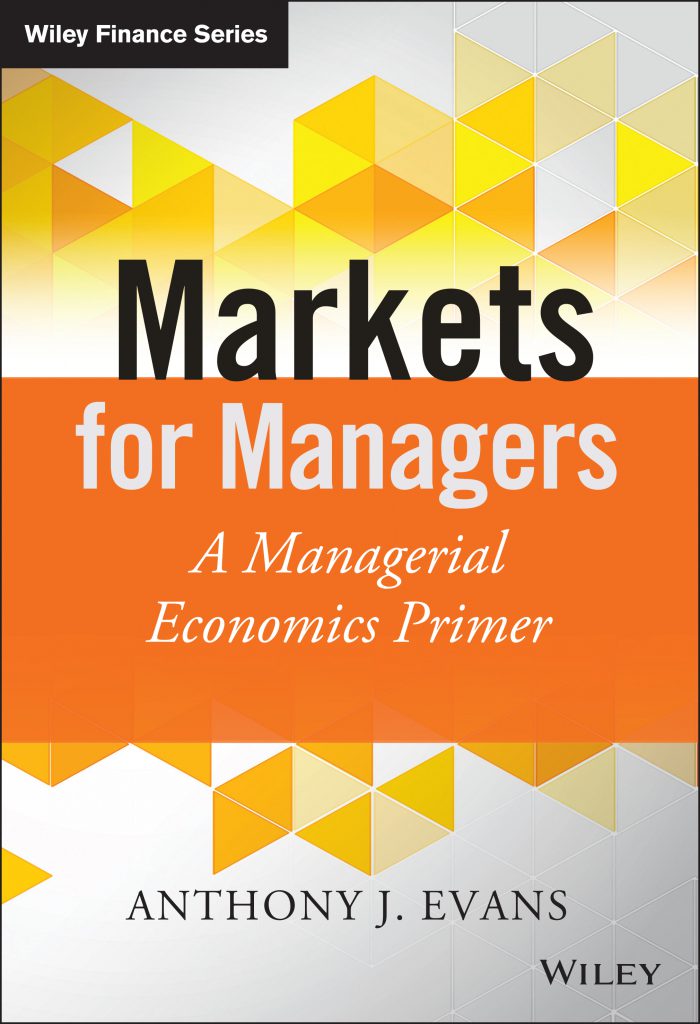
The course is designed to tie into Chapters 4 and 12 of the following (amazing) textbook:

The website for the book contains an array of other resources: https://anthonyjevans.com/books/markets-for-managers/

An additional reading list is available here: https://anthonyjevans.com/course-readings/

An edited list of highly recommended articles from The Economist is here: https://anthonyjevans.com/the-economist-an-mba-reader/


Schedule

9am Session 1

Economics matters: The link between economic institutions and global prosperity

In this lecture I will ask some broad and fundamental questions about the application of economic theory to the real world, and the role of the economist as a force for making the world a better place. I will try to convince you that we have a fairly good understanding of what causes economic growth, and how important this is for raising living standards and improving people’s quality of life. In other words, economics matters.

10:45am Break

11:00am Session 2

Groping in the dark: Why socialist calculation is impossible

12:30pm Lunch

2:00pm Session 3

Economic transition in Central and Eastern Europe: Shock therapy or gradualism?

3:30pm Finish

If you’ve taken the course, you can check your learning with this quiz:


Can also include the Bag Game and the International Trade Game

Monetary Theory and Policy Workshop

512Xl8FIwxL._SX258_BO1,204,203,200_


The purpose of this workshop is to understand basic models in contemporary Monetary Theory and Policy.

(Deep) background readings:

  • Patinkin, D. (1956) Money Interest and Prices Row, Peterson & Co
  • Friedman, M., and Schwartz, A., (1963) A Monetary History of the United States 1867-1960, Princeton
  • Woodford, M., (2003) Interest and Prices, Princeton

Textbook:

Problem sets:


Screen Shot 2015-12-30 at 09.36.17Readings on methods:

  • Origins of VAR – Friedman & Meiselman (1963); Lucas (1976); Sims (1980)
  • VAR – McCandles & Weber (1995); Bjornland (2000)
  • Narrative measures – Romer & Romer (1990)
  • Case studies – Sargant (1986)
  • Origins of DSGE – Kydland & Prescott (1982)
  • DSGE and Central Banks – Smets & Wouters (2002, 2007)
  • DSGE – Sbordone et al. (2010); Dotsey (2013); Romer (2011, Chapter 7)
  • After DSGE – Solow (2008); Blanchard (2016)

Two lectures on methods:

Other readings:


Courses:

Training programs:

Conferences:


Software links:


Dynare
Julia
Latex
Matlab
R
Stata


A Short Introduction to Macroeconomic Policy

64863_428871333867799_2124504579_n

Introduction

This short course provides an overview of the ways in which governments try to influence the economy. It will provide an explanation of what monetary and fiscal policy are, and why they are used. We will assess the ECB’s response to the financial crisis and the 2009 Obama stimulus bill. Emphasis will be on providing a framework for participants to refine their own opinions.

Prerequisites

The course does not rely on any previous study of economics. However, a familiarity with economic terms (such as “inflation”, “GDP”, “balance sheet”), and an awareness of contemporary policy debates (such as zero lower bound monetary policy), will be useful. The course is aimed at people who watch Newsnight but don’t quite feel they understand the economic foundations of what’s being said.

Teaching methods

  • Lectures (2 sessions)
  • Case discussion (1 session)
  • Workshop (1 session)

Textbook

The only mandatory readings are provided in the schedule below. However the course is designed to tie into the following (amazing) textbook:

The website for the book contains an array of other resources: https://anthonyjevans.com/books/markets-for-managers/

An additional reading list is available here: https://anthonyjevans.com/2010/03/course-readings/

An edited list of highly recommended articles from The Economist is here: https://anthonyjevans.com/2011/05/the-economist-an-mba-reader/


Schedule 

9:00am  Breakfast

9:15am  Welcome address

9:30am Session 1: Monetary policy: A Beginner’s Guide to Central Banking*

Video: “An introduction to the Dynamic AD-AS model

11:15am Break

11:30am Session 2: The Euro in crisis

“The Euro in Crisis: Decision Time at the European Central Bank” Harvard Business School case no. 9-711-049 (£)

Questions: 

1. How does the ECB conduct monetary policy?

2. What actions were taken after the BNP Paribas freeze?

3. How do these actions compare to the Federal Reserve?

1:00pm Lunch

2:00pm Session 3: Fiscal policy: The Confidence Multiplier*

3:30pm Break

3:45pm Session 4: Workshop

Market for Managers Problem Set

Questions: 7.1, 7.2, 8.1, 8.2, 8.3, 8.4, 8.5, 8.6, 8.7, 8.8, 8.9, 9.1, 9.2, 9.4

4:45pm Debrief

5:00pm Finish

Note: Sessions marked with an asterix (*) have a lecture handout available in advance. Cases marked with a pound sign (£) will be distributed in advance.


Extensions

The course does not cover the following: international economics, business cycle theory, growth theory, supply-side economics.


Numeracy Skills Bootcamp

bertrand-russell
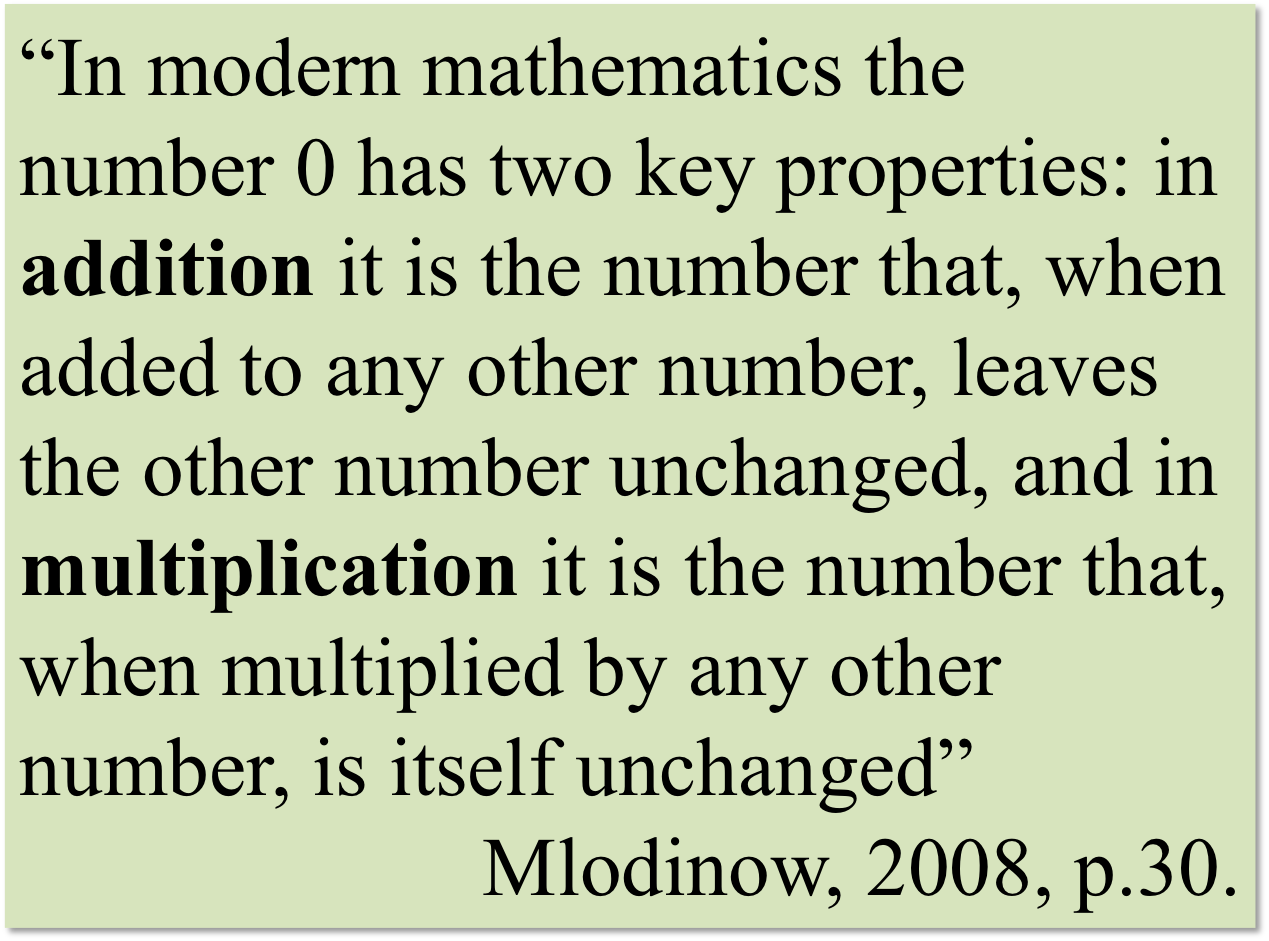
In 2008 I was asked to provide a short, intensive bootcamp for incoming students. This page is a collection of the resources that I used for that course. It contains some slides that define and explain key concepts, and also provides some examples of numeracy tests. In addition, I noticed that many students – particularly females – felt that they “weren’t math people”. I’ve done a video to discuss these fears. I hope you find these resources helpful.

I also recommend the following page, which is full of links:


Part 1. Fundamentals of Mathematics


 Download the handouts here.

  • Socrative Quiz: Fundamentals of Mathematics

Additional topics:

Some fascinating ideas:

fermat


Part 2. Practice Tests

Download the handouts here.


Additional resources:


Part 3. Gender Differences & Mathematics


Download the handouts here.

Further reading:

And remember:

comics-abstraction


This is part of my online course on Analytics.

Markets for Managers: A Case Method Seminar

72734_164913206864426_159457187410028_392315_5548790_n


This proposed two-day seminar is aimed at junior faculty teaching on general management programs. It shows attendees how to teach using the case method, and provides content for market-focused courses. If satisfactory progress is made attendees will then become licensed to utilise the classroom material in their own courses, and have access to ongoing support and follow up workshops.


Schedule

Day 1

Introduction to participant-centred learning

  • 9:00am – 10:30am | Session 1: A negotiation exercise
    • Malhotra, Deepak, “Hamilton Real Estate”, Harvard Business School Case Nos. 9-905-052 and 9-905-053
  • 11:00am – 12:30pm | Session 2: A classroom simulation
    • Holt, Charles A., and Sherman, R., (1999) “A Market for Lemons”, Journal of Economic Perspectives

The Case Method

  • 2:00pm – 3:30pm | Session 3: Competitiveness
    • Sölvell, Ö and Porter, M,  ”Finland and Nokia”, Harvard Business School case no. 9‐702‐427
  • 4:00pm – 5:30pm | Session 4: Public Finance
    • “Rovna Dan: The Flat Tax in Slovakia”, Harvard Business School case no. 9-707-043, March 2010

Day 2

Create your own teaching notes

  • 9:00am – 10:30am | Session 5: Prediction markets
    • Coles, Peter, Lakhani, Karim and McAfee, Andrew, “Prediction Markets at Google” Harvard Business School Case No. 9-607-088, August 20, 2007
  • 11:00am – 12:30pm | Session 6: Market-Based Management (R)
    • Weston, Hilary A., “Automation Consulting Services”, Harvard Business School Case No. 9-190-053, November 2000

Create your own cases

  • 2:00pm – 3:30pm | Session 7: La Marmotte
    • Evans, Anthony J., La Marmotte, January 2012
  • 4:00pm – 5:30pm | Session 8: Workshop 

Date: TBD

Location: TBD


Resources

Please get in touch if you would like further information.